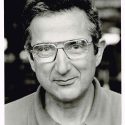
Miniature metal sculptures of everyday objects—from tool boxes to vacuum cleaners.

In line with the goals of the Joe Martin Foundation, the Miniature Engineering Craftsmanship Museum has sought to compile and maintain an archive of the great builders of our time, as well as their projects. In doing so, we hope to honor each craftsman and their work by giving insight into each person's life, background, training, and attitude toward craftsmanship.
The wide range of craftsmen honored here have used their trade skills to produce works of art, going beyond simple production. The quality of work far exceeds the bare minimum. It demonstrates competence and a level of perfection that can be recognized by many, but achieved by few. Frequently, this work involves building exact scale models of a variety of objects, often done simply for the love of the work. The builders’ satisfaction comes from the pursuit of perfection.
If you would like to submit a recommendation for a craftsman or project to be considered for inclusion in the Miniature Engineering Craftsmanship Museum in Carlsbad, CA, please download and fill out the submission form, or simply send an email to mecm@craftsmanshipmuseum.com. Be sure to include information about your recommendation.
Below is a list of our featured craftsmen with links to their individual pages.
Miniature metal sculptures of everyday objects—from tool boxes to vacuum cleaners.
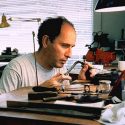
Unique and beautiful machined jewelry.
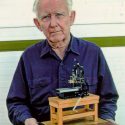
Machine shop tools in miniature.

A miniature Curtiss V-12 engine, and the model biplane to house it. Winner of the Joe Martin Foundation Craftsman of the Year Award for 1998.

A 30-year quest to build a giant model of Herod’s Temple.
Building a working 1/6 scale Holbrook lathe.

Highly detailed paper sculptures featuring Native American subjects.
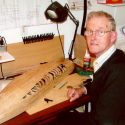
Incredibly detailed radio-controlled model ships.
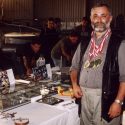
Over 30 years of award winning, super-detailed aircraft models in 1/72 scale.
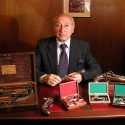
A large collection of beautiful miniature weapons from Columbia.
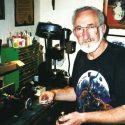
Multiple “Best of Show” winning model cars. Winner of the Joe Martin Foundation Lifetime Achievement Award for 2006.
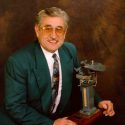
Masterful miniature machine tools from England. Winner of the Joe Martin Foundation Craftsman of the Year Award for 2003.
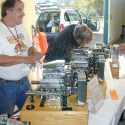
Members of the Bay Area Engine Modelers club create some outstanding model engines. The group also collectively received the Joe Martin Foundation Lifetime Achievement Award for 2016.
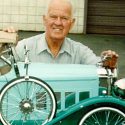
Pedal cars by a master.

A model engineer with a vast array of interests and skills.

A master I.C. engine builder who made his plans and kits available for all enthusiasts. Winner of the Joe Martin Foundation Lifetime Achievement Award for 2004.
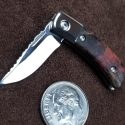
Beautiful miniature knives made by a lifelong enthusiast.
Tiny silver motorcycle engines modeled as jewelry.
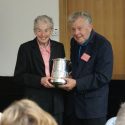
One of England’s master model engineers, and her incredible traction engines. Winner of the Joe Martin Foundation Craftsman of the Year Award for 2017.

An excellent craftsman in everything from model ships and full-size boats, to clocks and steam engines.