
Building and Writing About Scale Aircraft for a Living
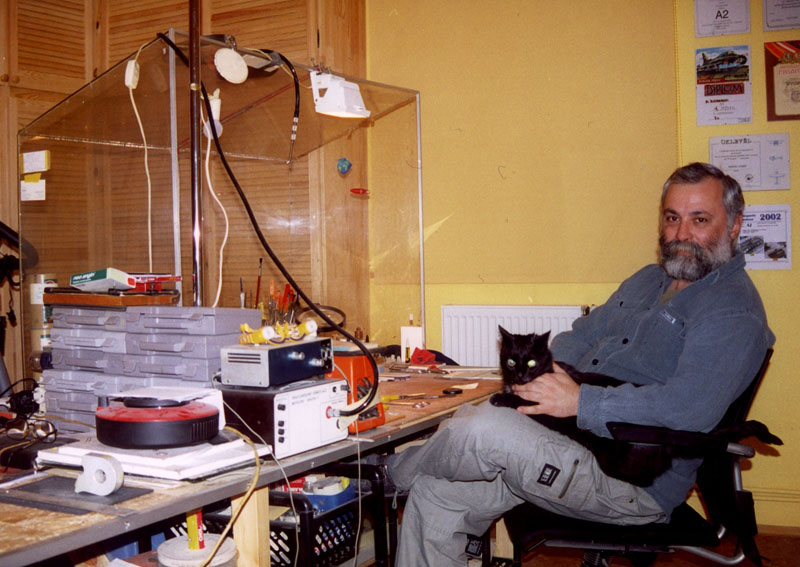
Andrzej Ziober sits in his model workshop.
Introduction
Andrzej Ziober gave up a promising career in Poland as a scientific researcher to pursue his life’s passion—building the most detailed model aircraft that he could produce. Now, Mr. Ziober doesn’t do it for money, as his models are not for sale. Andrzej simply has a passion for building. For over 30 years, he’s made a living with this passion by writing about models and model making. The models themselves exhibit an incredible amount of detail for their small scale.
Even the interiors are filled with structural detail, although those elements are hidden once the models are glued together. Andrzej takes photos of those portions to present with the finished model. Each of his models can take years to build. As a result of his hard work and patience, Andrzej’s models have earned many gold medals and trophies. However, his greatest reward is the satisfaction that he obviously gets from producing such fine models. The following is Andrzej Ziober’s story.
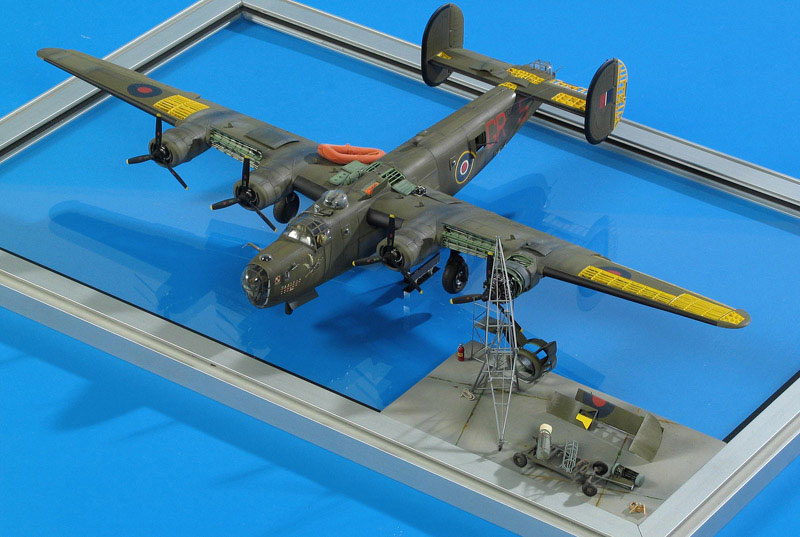
Andrzej Ziober’s 1/72 scale model B-24 Liberator. Some of the parts and tools used to work on the bomber were also made in miniature, and can be seen in the lower right corner.
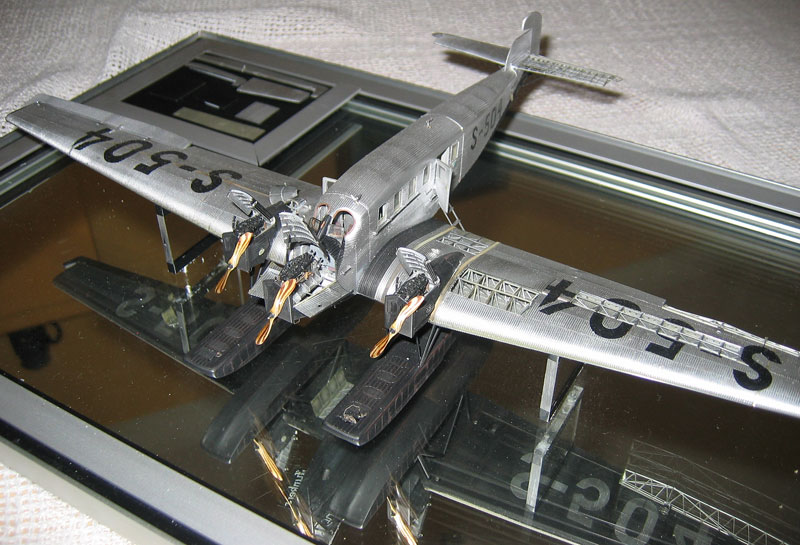
Andrzej’s award-winning 1/72 scale model German Junkers tri-motor airplane sits on a mirrored base.
A Lifetime of Aircraft Modeling Starts With a Bold Decision
Andrzej Ziober was born in Czestochowa, Poland. He attended a school with great aviation traditions—4th Henryk Sienkiewicz High School. Many of the students became pilots and WWII Polish national heroes. These traditions played a very essential part in Andrzej’s life story.
Naturally, as a young boy Andrzej wanted to become a pilot as well, but it turned out to be completely out of reach in contemporary Poland. He could only become an airplane modeler, but he didn’t want to be just one of many. Andrzej wanted to become a famous modeler. He was only about 14 years old at the time, and quickly realized that becoming a well-known modeler was no small task.
So, Andrzej started building small, simple kits as millions of people do worldwide. In the meantime, he graduated from college with a degree in biology and started to work as a natural scientist at a Polish university. Eventually, Andrzej also obtained his doctorate degree, but soon realized that a scientific career wasn’t as fascinating to him as building models. At that point, he made a tough decision that would alter the course of his life.
Despite having been trained as a scientific researcher, Andrzej decided to spend the rest of his life building scale models. At the time, many of his friends couldn’t understand his choice, and even Andrzej was unsure of the decision he had made.
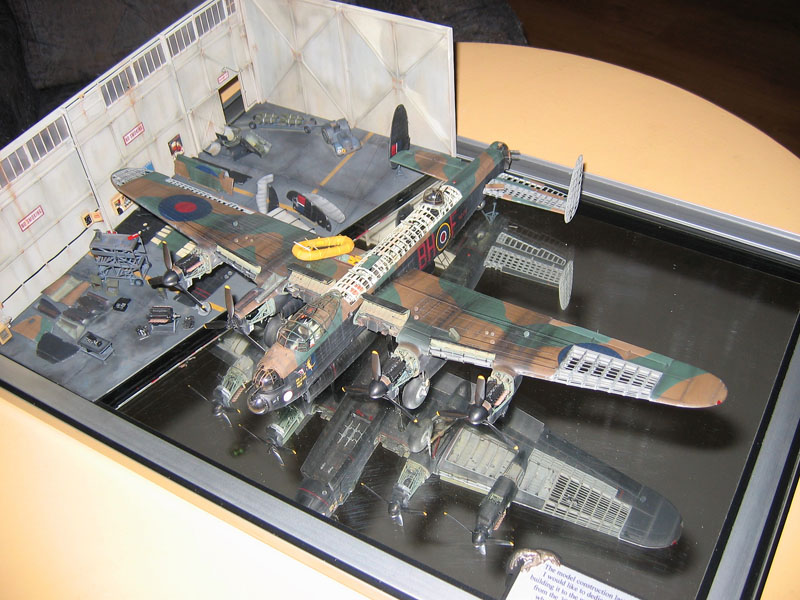
This 1/72 scale Lancaster bomber is displayed as an aircraft under repair in the hangar. It has open panels and skin removed in certain areas, with tools sitting on the hangar floor. The mirrored floor helps viewers see details on the underside.
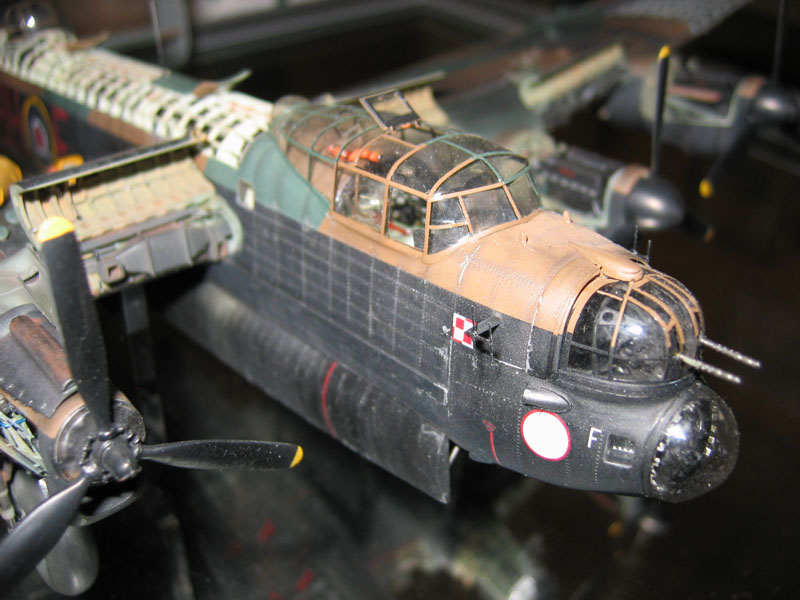
Another angle of the Lancaster model shows more of the nose turret and some of the open hatches and wing structure. Photos were needed to show the hidden details inside of the fuselage.
Now over the age of 60, Andrzej has no regrets about his decision. He still makes plastic models, but not the kit ones. Andrzej didn’t want his models to be just toys—he wanted them to be a kind of fine art. He wanted people to speak about them as works of art rather than playthings.
As such, the basic structures of his models are augmented by custom made components and details. Andrzej wanted his models to show every detail that a real plane has, from engines to tiny elements like toilet paper in an aircraft bathroom, or ashtrays in the passenger seat.
Even smaller elements like electronic lamps are visible after opening the radio station in his Lancaster model. Of course, all of the wires, installations, and cockpit panels had to be recreated in his models, too.
These elements may not be that surprising, but they are more impressive when considering that Andrzej has made everything at a typical plastic model scale of 1/72. Moreover, Andrzej makes them all by himself without using any readymade factory model parts. Building such a model requires enormous precision and a great deal of patience.
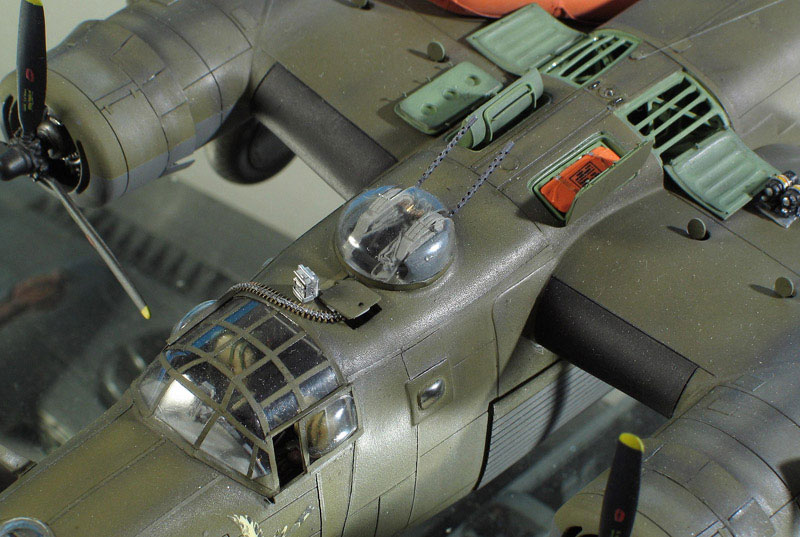
A close-up view of the top of the Liberator model shows the fuel doors open, along with some of the hatches. Inside one hatch is a 1/72 scale life raft!
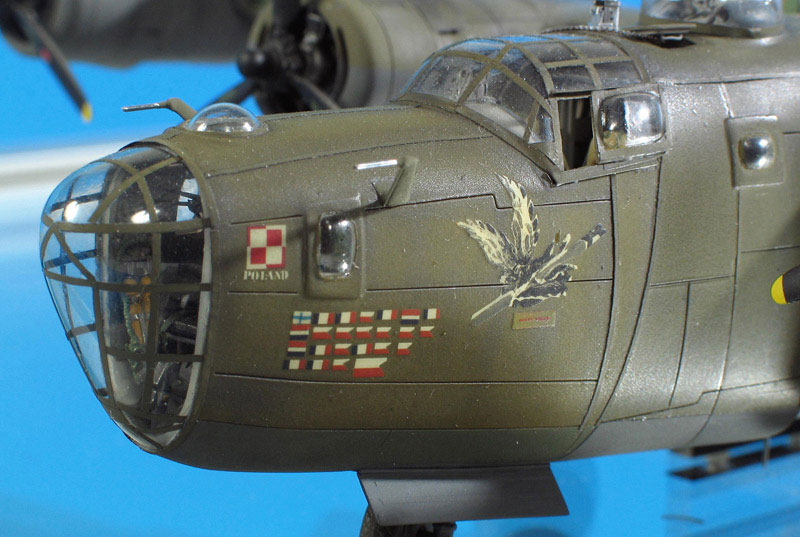
Another angle shows more details in the nose and bombardier’s canopy of the Liberator.
On the topic of patience, it takes Andrzej about five years of constant labor, working about five hours a day, to create an aircraft model with such a level of realism. Once he started making these models, Andrzej began taking part in competititions—first in Poland, and then across Europe.
By now he has participated in all of the biggest and most difficult competitions organized in most of the European Union countries. So far, Andrzej has won in every competition he’s taken part in, bringing home gold medals, Best of Show, or Best Aircraft awards each time.
Overall, he has won more than 130 gold medals, and more than 100 special cups or other trophies. Andrzej has entered his models in competitions in Great Britain, France, Spain, Italy, Portugal, Switzerland, Austria, Belgium, Greece, Denmark, the Netherlands, Finland, Norway, Sweden, Slovenia, Croatia, Serbia, the Czech Republic, Hungary, Slovakia, and, of course, Poland. Most recently, he won a contest in Lithuania, becoming the first foreigner to do so. There is no other modeler in Europe who has built such detailed models, or won as many prizes in such a wide range of countries.
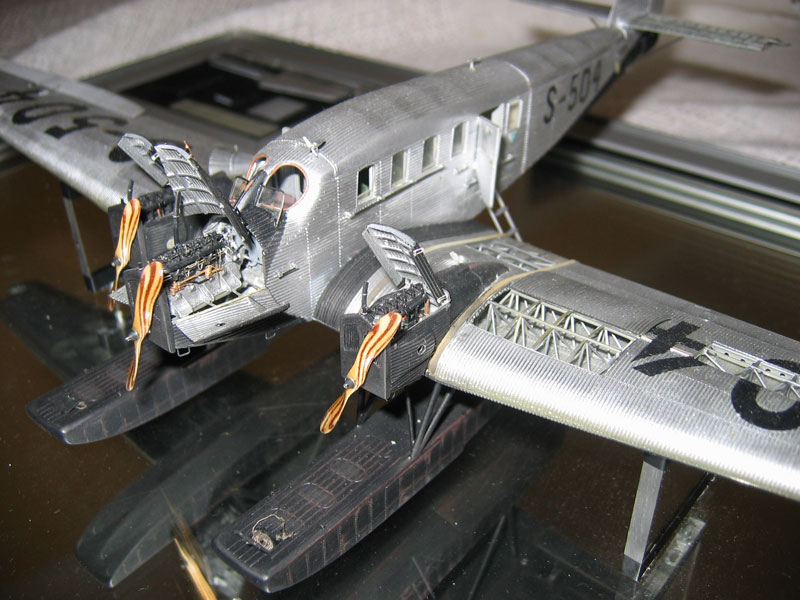
A front view of the 1/72 scale Junkers shows the engines with hatches open along with the landing floats.
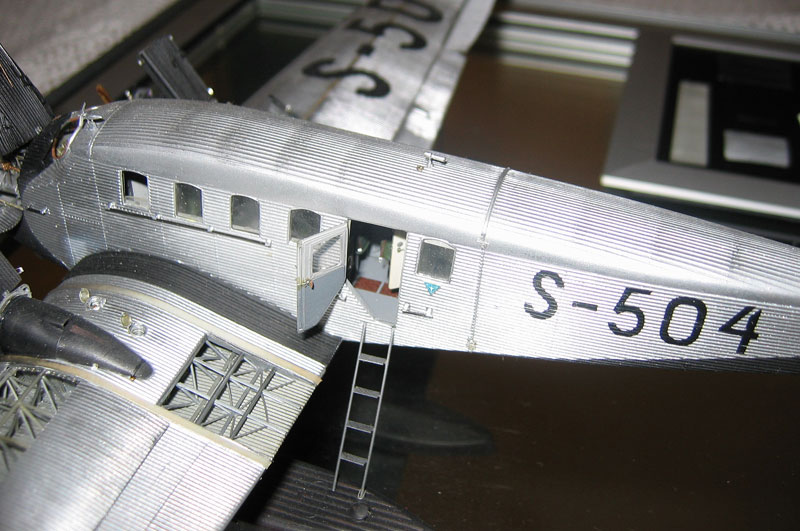
A side view of the Junkers with an open passenger door.
Model Making Brings Prestigious Polish Awards
In Poland, Andrzej also received a Golden Modeler’s Badge with Three Diamonds, which is the premier order granted by the National Aero Club. Additionally, he has also been a four time recipient of a very prestigious award given to the most meritorious people in Polish aviation. For his modeling achievements, and the promotion of Polish aviation history as a result, Andrzej was awarded the highest Polish aviation award—the honorable “Blekitne Skrzydla” (the Blue Wings).
This title is given to the preeminent Polish aviation sportsmen, aircraft constructors, military pilots, and others who have earned a special place in Polish aviation history. Andrzej is the only modeler in this prestigious group. Along with that, Andrzej’s life story has also been included in a special historical album published in honor of 100 years of aviation, and the 85th anniversary of Polish aviation.
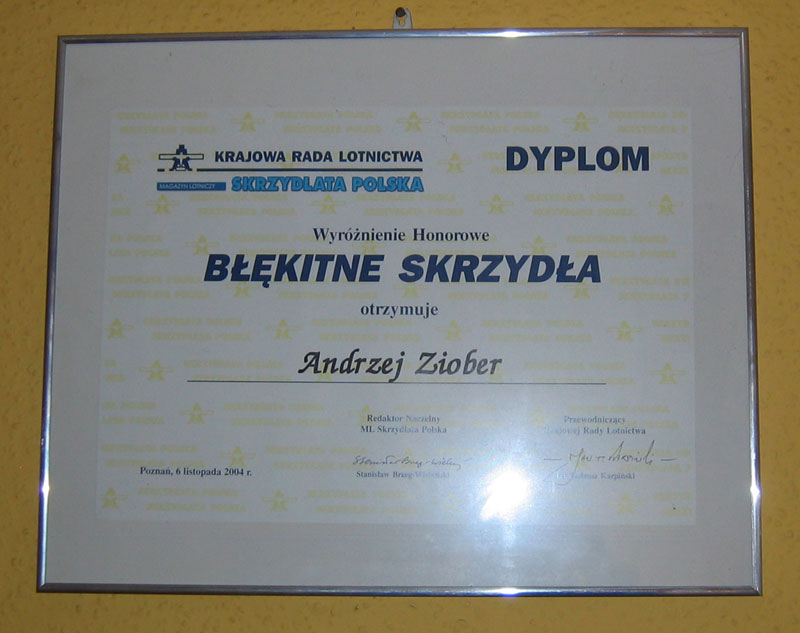
Shown here is the certificate for Andrzej’s prestigious Blekitne Skrzydla aviation award. Andrzej is the only model maker to ever receive this honor.
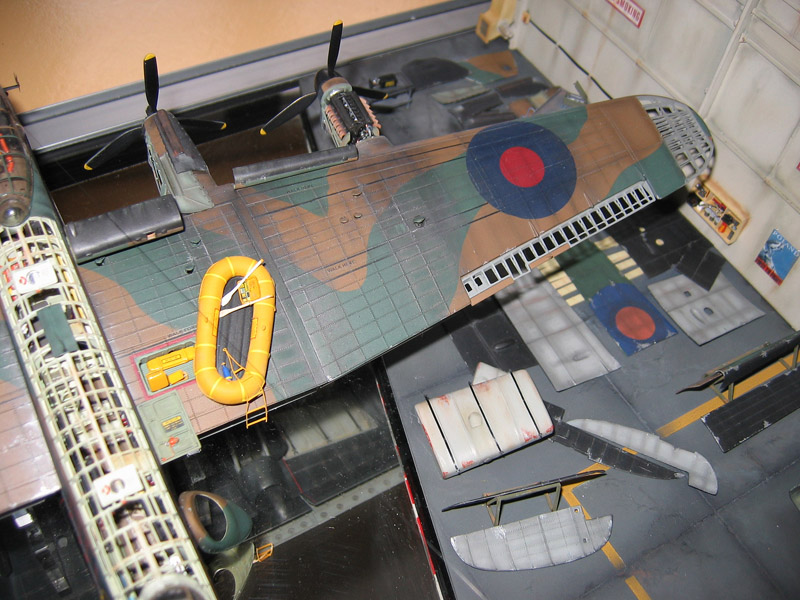
A close-up reveals more details in the 1/72 scale Lancaster model. Smaller and smaller elements, like the miniature life raft, draw the viewer’s eyes into this project.
Now, along with making his childhood model making dreams come true, Adrzej’s professional life also finally led him to real aviation. For many years now he has worked for Skrzydlata Polska, the oldest Polish aviation magazine. The magazine has been published for over 80 years, and is one of the oldest such publications in Europe. Andrzej also served as the chief editor for The AeroPlan, another Polish aviation magazine. Even after all these years, Andrzej was still taking part in European model competitions, and still winning them!
In 2014, Mr. Ziober started to take his new Mil Mi-6 helicopter model to competitions. In May of that year, he participated in the Monza competition in Italy, where the Mi-6 model won Best of Show. Later in October, Andrzej was invited as a special guest to take part in the Modeler’s Expo competition in Osaka, Japan. His Mi-6 model won the Gold Prize at that event, too. Notably, that was the first time that a foreigner had ever won the top prize in the Japanese competition.
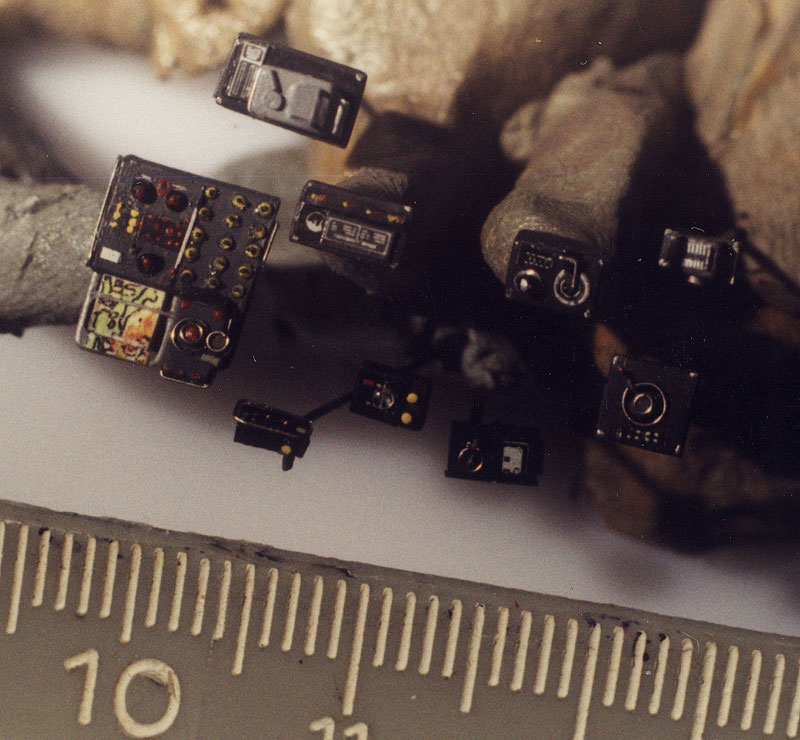
Shown here are the navigator’s position equipment panels for the 1/72 scale Liberator. In the lower left is a tiny scrolling map.
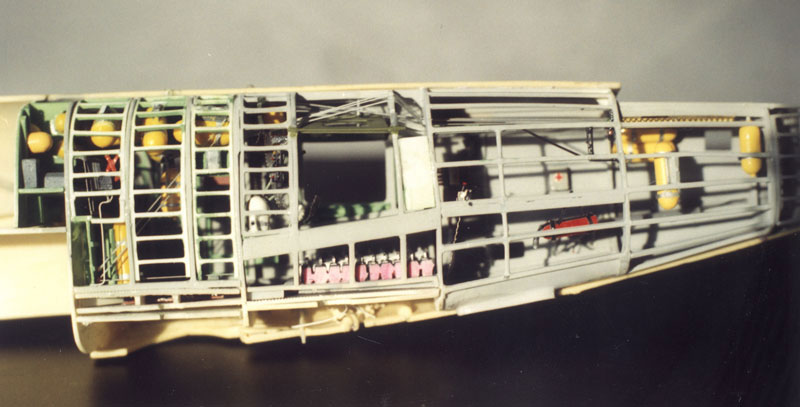
Looking at the center of the Liberator fuselage (before paneling), details as small as a first aid kit can be seen inside. Once the two fuselage halves were glued together, the judges could only see these details from photos that Andrzej took before final assembly.
Remarkably, Andrzej has never lost a single competition in the past thirty years. In fact, the only times that he’s been awarded second place were for competitions where he entered two models in the same class, wnning both first and second prize. Andrzej regularly writes about his competition experiences and suggestions in the Polish aviation magazines. All told, he has authored hundreds of articles devoted to modeling.
These articles cover everything from model building technology to more serious psychological aspects of achieving success in modeling. In his articles, Andrzej tries to emphasize that modeling doesn’t have to be just a hobby. It can be a great life passion, and a very serious pursuit of art. In Andrzej’s case, it even led to international acclaim!
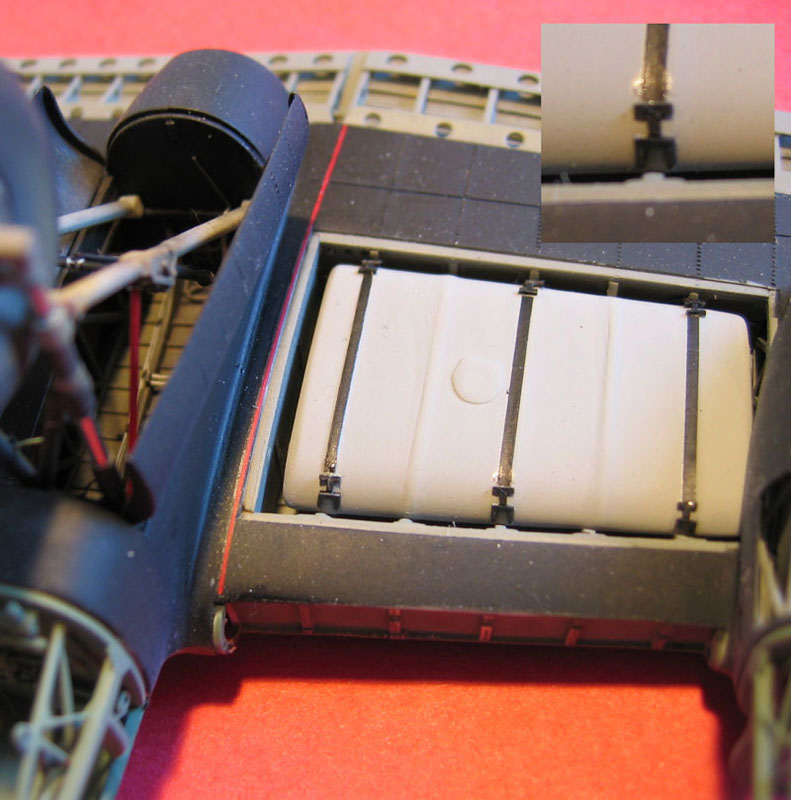
Fuel tanks with holding straps are visible inside the wing of the scale model Lancaster.
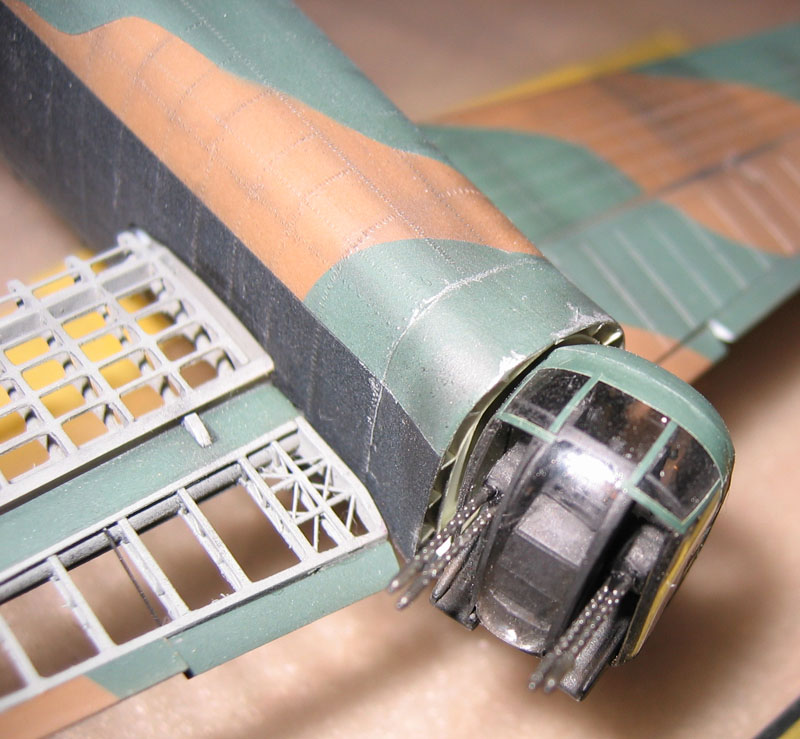
A closer look at the rear gun turret on the 1/72 scale Lancaster.
Building “Traps” to Draw in the Viewer
With such a lengthy resume, it’s no surprise that Mr. Ziober has a lot of insight when it comes to model making. In one of his articles, Andrzej explains his model building philosophy in his own words:
“Against the appearance it is not only an abstract idea of absurdity. It has also a logical explanation. Well, let’s imagine that we stand 5 meters from an unknown model. What can we expect when we slowly approach to it? From the distance of about 3 meters we will see groups of construction’s elements. If the model is well done, we will perceive more and more details. We will notice painting and decals, interior elements, opened hatches etc. In other words, the attractiveness of the model will increase gradually as we see more elements.”
“I also know, that from the certain point of approaching it gets easier to see shortcomings of gluing, inaccuracies in symmetry of the details, I mean everything that the modeler didn’t make correctly. Such is well known and coded in brain’s nooks reality. I decided to make my model in such a way that described ‘world seeing’ turns over about 180 degrees. I was trying to bring the precision of the details to such a level of perfection, that from the small distance, a spectator could perceive still smaller and smaller details, instead of previously mentioned mistakes!”
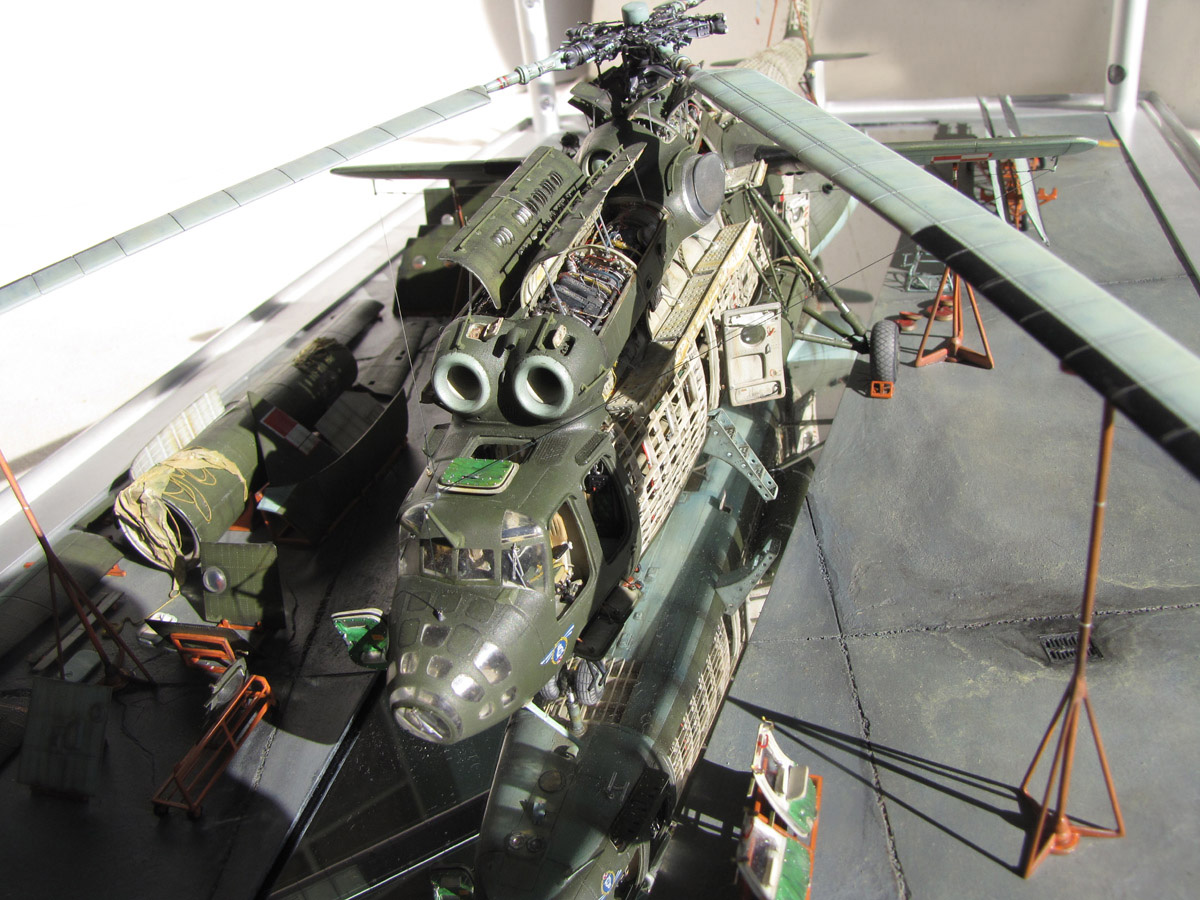
In 2014, Andrzej completed this 1/72 scale Russian Mil Mi-6 helicopter model. He went as far as to include the tarp and ropes draped over the fuselage components on the left of the helicopter.
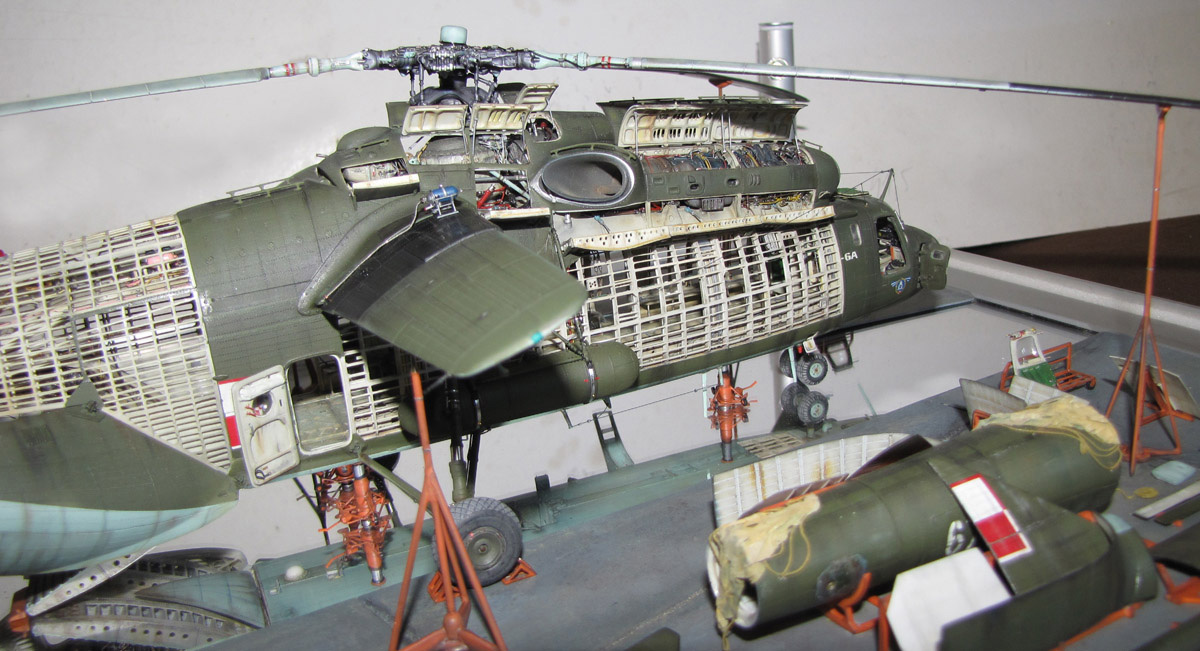
Like some of Andrzej’s other models, the helicopter sits in a diorama with several panels removed. The model Mi-6 helicopter won Best of Show and a gold prize in two separate competitions.
“It was a kind of trap for a judge estimating my model. The judge looks and asks himself in his mind: What is that? – Oh! That’s a woolen cap of the pilot. I can see it’s sheepskin lined… Wait a second! There is something shining… Oh! His glasses… and at the back of the glasses, there is something else – a rubber belt buckle of the glasses! I was trying to deliver him a lot of joy in discovering ‘strange’ things pulling him deeper and deeper in my trap of interest for this model.”
“These are some other examples of this kind of trap: a judge sees from a distance a small, orange thing that doesn’t fit to Liberator in any way. Curiosity tells him to approach and suddenly, the orange ‘thing’ appears to be a dinghy on the wing. Still approaching he can see paddles and a container with compressed air for the dinghy automatic pumping.”
“The same rules I used with the opened wings yellow elements. First, they are only yellow stains, then in a close up, he can see the wings construction, and then, when he bends over the model, he can see lines, ribs and pulling rods and even diminished rolls for pulling rods, which decrease a resistance in the time of their move. There are still more ‘traps’ in this model.”
“The whole ‘tiny element’ thing should make the judge think, that it would be a great model, if the whole interior section was reproduced with the same accuracy! And then I give him my documentation where he should see the pictures of the model’s interior! He will also learn that it was made by hands of a modeler, not a machine to produce toys for sale.”
—Andrzej Ziober
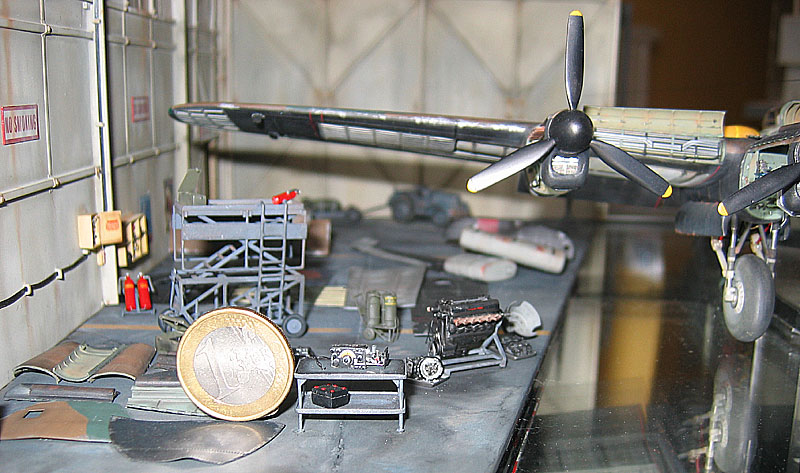
Without any reference, it can be difficult to appreciate how small some parts for these models actually are. We asked Andrzej to place a one Euro coin in a few photos to lend a sense of scale to the tiny models, as shown here. (A Euro coin is just slightly smaller than a US quarter.)
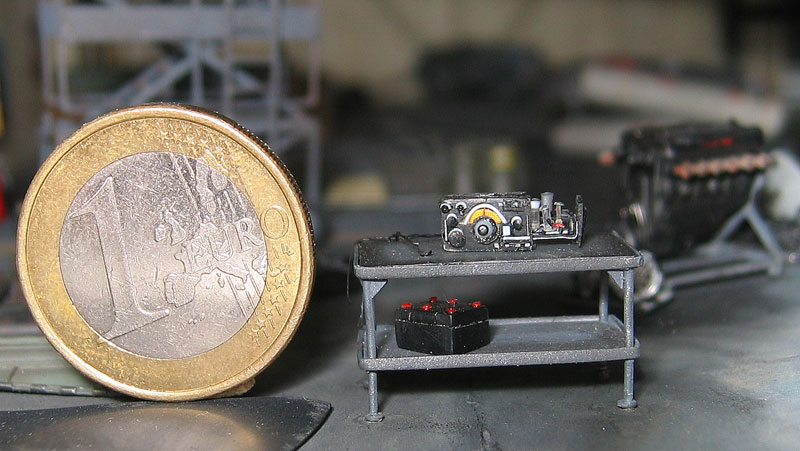
Tiny custom built 1/72 scale aircraft equipment is dwarfed by a one Euro coin.
Other International Competition Success
In 2009, Mr. Ziober brought two of his models to the US to compete in the biggest competition in North America. He entered his 1/72 scale Junkers G-23W in the “civil aircraft” class of the competition. In the “multi-engine combat aircraft” class, he entered his 1/72 scale Lancaster model. Unsurprisingly, both models won first prize in their respective classes. Additionally, Andrzej became the first European modeler in the history of the competition to be awarded with the “Best Aircraft” title for his model Lancaster.
In 2011, during a huge contest commemorating the 100th anniversary of Turkish aviation, the Lancaster won again in the international competition in the Masters class. In 2012, at the Melbourne Model Expo, Andrzej brought another victory to Poland in the “aviation models” category—again for the Lancaster. He also won Best of Show and the People’s Choice Award in that competition. In June 2013, he competed in South America, winning major awards for the Lancaster and the Liberator during a Brazilian competition.
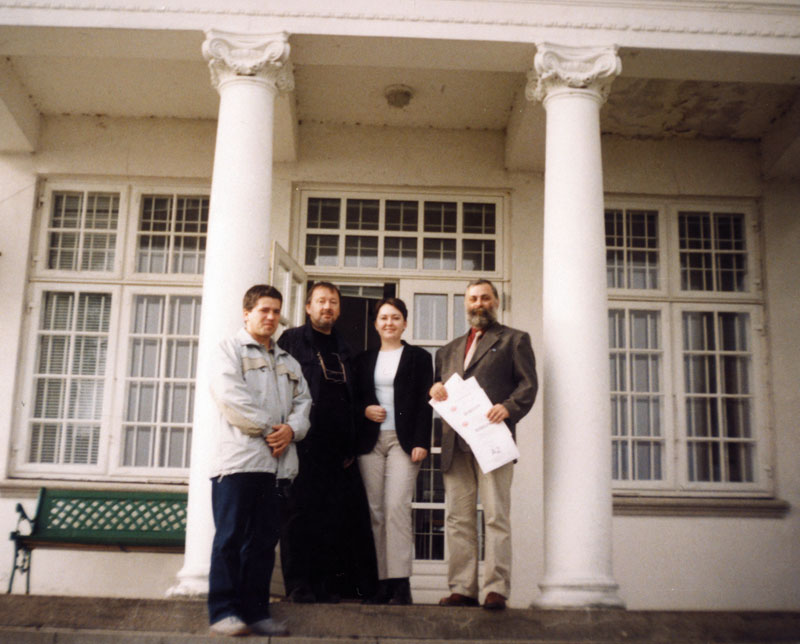
After winning the Modeling Championship of Denmark, Andrzej took part in a ceremonial meeting at the Polish Ambassador’s office in Copenhagen. Andrzej is on the far right.
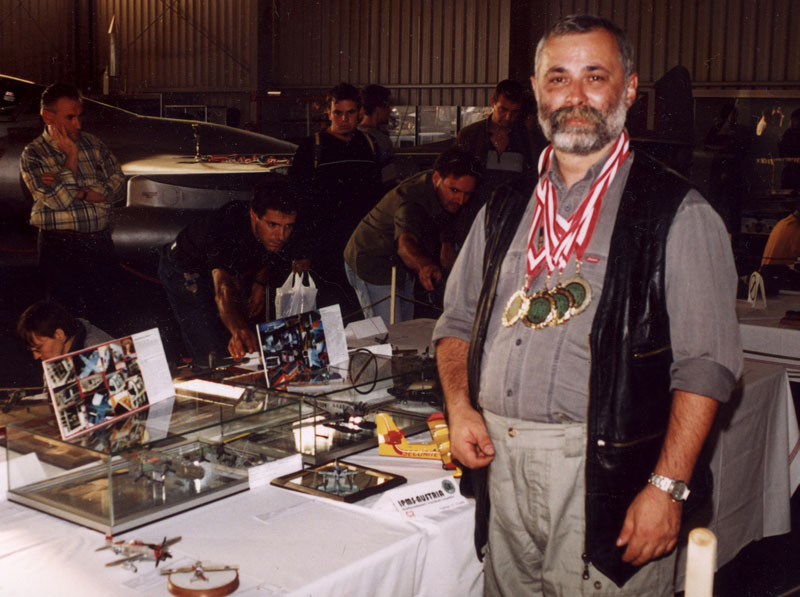
Andrzej wears the four gold medals he was awarded for his Junkers G-23 and Liberator models at an Austrian competition.
Andrzej’s Next Award Winner—a 1/72 scale Mi-6 Helicopter
For six years, Andrzej spent most of his time building a model of the Russian Mil Mi-6 helicopter at 1/72 scale. Designated as the “Hook” by NATO, the Mi-6 is a heavy lift transport helicopter that was first flown in 1957, and produced up until 1981. many of these aircraft are stil in service. Andrzej’s model is a true miniature of the original aircraft, which is flying in the colors of the Polish Air Force. This miniature features an exact reproduction of all details, both exterior and interior. The model was built in the “stripped-of-sheets” convention to display its structural details. The scale Mi-6 consists of thousands of miniature parts made by Andrzej himself, without the use of any commercial kits.
The miniature helicopter is presented in a diorama with certain panels and other details removed from the model. Andrzej also included multiple LED lamps so the model could be presented as a night flight line scene. A mirror under the aircraft allows viewers to see the detail underneath.
All of the jacks, supports, and related equipment were also custom built. The level of detail is simply astounding, and it shows the untold hours that Andrzej put in for over six years to create a model of this historic craft.
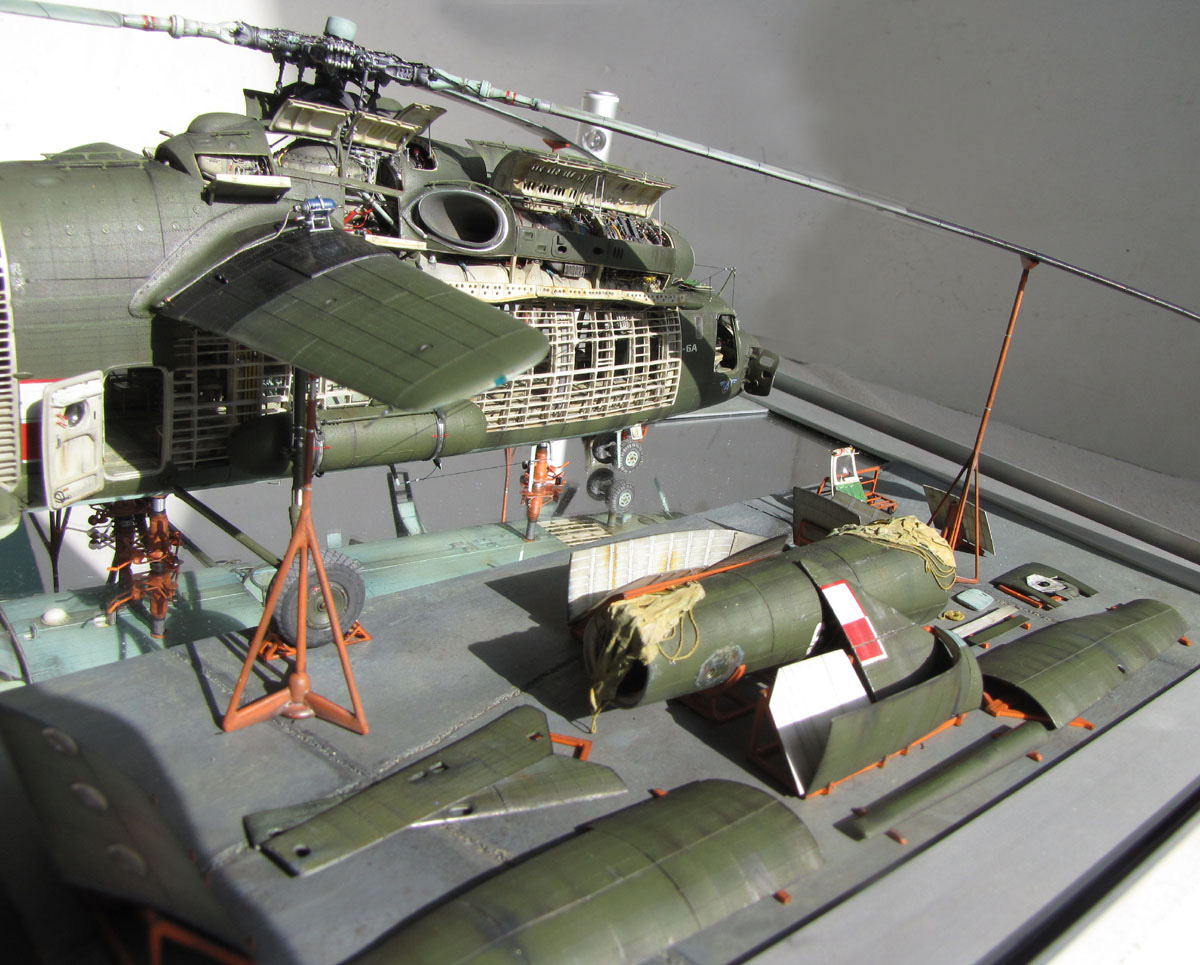
Andrzej submitted a number of photos of his more recent 1/72 scale Russian Mil Mi-6 helicopter. Interestingly, the model helicopter has the marking of the Polish Air Force. This tiny scale model helicopter is loaded with miniature details.
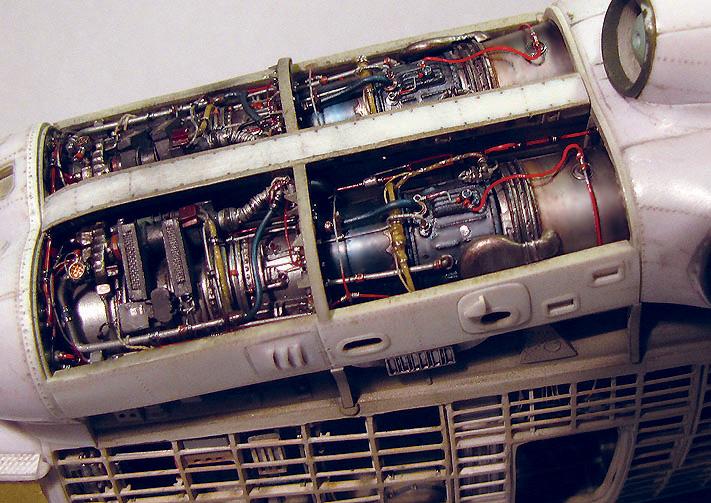
A close-up of the engine compartment early in the Mi-6 build, before exterior paint or access panels were added.
Model Aircraft Articles
Along with his model making, Andrzej has devoted many of his articles (published in the Skrzydlata Polska and The AeroPlan) to more serious issues, such as physiology and ergonomics in modeling. Those articles are where Andrzej puts his biology education to use. He has also dedicated many of his articles to the psychological aspects of building very complicated models. Over the course of many years, Andrzej has written enough articles about modeling to fill a book. He noted that one day he might publish the articles as such, but for the time being his focus is mainly on building new models. However, his goal is still the same—to make each new model better and more complicated than the one before.
View more photos of Andrzej Ziober’s internationally acclaimed scale model aircraft.